Selected Duets for Flute Podcast
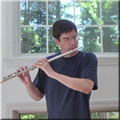 Selected Duets for Flute Podcast– Using his home recording studio, David has recorded, and is podcasting, some of the best duets from the book Selected Duets for Flute, Volume 1 Edited by H. Voxman. These flute duets are standard music education resources for flute students learning to play the flute by taking flute lessons and are fun to play for all flutists. The flute duets are also valuable performance materials for two flutists. They are especially effective for performing flutists playing wedding ceremonies, church services and other occasions calling for elegant flute music.
 These recordings are also available as a flute podcast. In addition to listening to the flute duets by visiting this web page, you may subscribe to the Selected Duets for Flute podcast using iTunes or any other podcast software. By subscribing to this flute podcast, you will be sure to get the latest episode every time you start iTunes on your computer.
As an added music education resource for flute students and flute teachers, David has also recorded each of these duets in a flute 2 only version that can be used as a flute play along. “Both Flutes” is a recording of the two flute parts together. “Flute 2 Part Only” is a recording of the second flute part alone to be used as a flute play along. The “Flute 2 Part Only” duets start with metronome clicks lasting for 2 measures so you can come right in with the recording. Use the Flute One part in your Selected Duets book to play along with the “Flute 2 Part Only” accompaniment recordings.
iTunes Reviews
"This has helped so much with my timing!!! Thank you David Summer!" - flutehappy
"Returning to the flute after many years away ...these podcasts... make practice a true pleasure." - LouiseCasey
"It's difficult to find someone to practice duets with... but now we have you!" - Geri Ann
"Beautifully done pieces!" - Fluter56
School instrumental music teachers, as well as flute instructors, flute ensemble directors, conductors, music educators and others involved in music education may share this flute podcast and associated recordings with their students. Professional flutists engaged in giving
private flute lessons may find this flute podcast to be a valuable adjunct to their instruction. Students may use them to review how their assigned flute duet should sound with both flute parts as well as to practice the duets with the “Flute 2 Part Only” free play along flute tracks.
The flute podcast available on iTunes, contains the recordings of both flutes. Recordings of the corresponding “Flute 2 Part Only” play along flute accompaniment tracks can be found on this page. There are free music education flute play along tracks for download, or you can listen to them here.
Episode 61Page69 #2, Waltz
Selected Duets for Flute, Page 69 Number 2, Waltz, performed by David Summer.
A waltz is a ballroom dance in triple meter (usually 3/4 time). Couples dance close together, with the man's right hand on the woman's back or around her waist. The tempo marking for this duet, "Allegro vivace", indicates a tempo that's faster than an Allegro. This fast tempo is commonly found in waltzes originating in Vienna.
Austrian composer, Johann Nepomuk Hummel, was also a virtuoso pianist. His style of writing bridges the classical and romantic musical periods, with most of his pieces being, naturally enough, for piano. He wrote several pieces for multiple pianos, also operas, masses and more. Hummel's Trumpet Concerto in Eb, is part of the standard performance literature for trumpet. It's a very melodic piece, well worth searching out.
The metronome setting for this performance is half note = 144.
Episode 60Page68 #1e, Rigodon II from Sonata VI, Op.5
Selected Duets for Flute, Page 68 Number 1e, Rigodon II from Sonata VI, Op.5, performed by David Summer.
This second Rigodon presents a good opportunity for the teacher to talk about arpeggios, since the second flute part is littered with them. For both of these rigadoon duets, the student should practice both flute parts. Teacher and student might even exchange parts on the repeats.
The metronome setting for this performance is half note = 80.
Episode 59Page68 #1d, Rigodon I from Sonata VI, Op.5
Selected Duets for Flute, Page 68 Number 1d, Rigodon I from Sonata VI, Op.5, performed by David Summer.
The title of this duet, "Rigodon" is a variant on the spelling of rigadoon. A rigadoon is a dance for two couples in quick double time. The rigadoon originated in Provence, France, in the 15th-century and is named after a dancing master from Marseilles. It became popular at the court of Louis XIV from the 1670s and spread to most of the courts of Europe. Couples dance side by side without holding hands and at certain moments make a springing step called the pas de rigaudon.
The metronome setting for this performance is half note = 88.

Episode 58Page67 #1c, Adagio from Sonata VI, Op.5
Selected Duets for Flute, Page 67 Number 1c, Adagio from Sonata VI, Op.5, performed by David Summer.
This third movement from Sonata VI, Op.5, by Johann Quantz changes to the key of G major (the relative major to e minor). It's slow enough so that performers are advised to count eight notes as getting one beat, as I do for this performance.
Quantz was not only a prolific composer of music for the flute, as well as the author of the afore mentioned book "On Playing the Flute", he also made flutes of his own design. Probably the most famous recipient of these instruments was King Frederick the Great. Quantz built many flutes for Frederick while serving the King.
To modern western musicians, Quantz's most interesting addition to his flute is a key for D# even though the enharmonic Eb key was already present on the flute, as it is today. This was to satisfy the desire to play using a system called "just intonation", which was prevalent until about the middle of the 19th century, before the widespread adoption of the "equal temperament" system most widely used in western music today.
The metronome setting for this performance is eigth note = 88.
Episode 57Page66 #1b, Allegro from Sonata VI, Op.5
Selected Duets for Flute, Page 66 Number 1b, Allegro from Sonata VI, Op.5, performed by David Summer.
This second movement from Sonata VI, Op.5, by Johann Quantz retains the key of e minor from the first movement but this movement is a lively Allegro.
In addition to numerous musical compositions for flute, Quantz is also the author of a seminal musical treatise for the instrument entitled "On Playing the Flute". "On Playing the Flute" belies its title by containing not only a wealth of information on flute playing, but also by covering a wide range of subjects including breath control and musical accompaniment as well as more general musical topics such as performance anxiety. The book was used by his students as the basis for a "school of flute playing" and remains relevant today. It is still in print and makes a worthy addition to any flutist's library.
There are no repeats in this performance and the metronome setting is dotted quarter note = 66.
Episode 56Page66 #1a, Adagio from Sonata VI, Op.5
Selected Duets for Flute, Page 66 Number 1a, Adagio from Sonata VI, Op.5, performed by David Summer.
Johann Joachim Quantz is a name that is well known by professional flutists as well as advanced flute students. Quantz wrote over 300 concertos and many flute sonatas. This duet is from one of his early efforts, Sonata VI, Op.5. He also wrote many collections of flute duets, probably the most popular today being his "Six Duets For Two Flutes Op.2".
Although he traveled widely, studying music in the first half of his life, Quantz spent his last 30 years, from 1741 to his death in 1773, in Dresden under the service of King Frederick the Great of Prussia.
This recording is the first of 5 movements of the Sonata. The other 4 movements will be presented over the next 4 podcast episodes.
The metronome setting for this performance is quarter note = 69.
Episode 55Page65 #20, Minuet
Selected Duets for Flute, Page 65 Number 20, Minuet from Duettino, Op.42,No.8, performed by David Summer.
This Minuet, by James Hook, is from his collection of short flute duets entitled "12 Duettinos, Op. 42". (Duettino meaning a short or concise duet.) James Hook was a prolific English baroque composer, composing what may have been the first clarinet concerto written by an English composer. Like many baroque composers, he was a church organist and used the instrument as a compositional aid. James Hook was an extremely popular and successful composer. Hook became wealthy from his compositions, he encouraged young musicians and he was noted as a generous and jovial family man.
The second repeat is omitted from this performance and the metronome setting is quarter note = 100.
Episode 54Page64 #19, Allegretto
Selected Duets for Flute, Page 64 Number 19, Allegretto, performed by David Summer.
This piece is an Allegretto, which again is a moderately fast tempo between Allegro and Moderato. Like many of the previous duets, this one also has some imitative characteristics. This duet is either by Henry Eccles or his brother John Eccles, both of whom were English baroque composers.
The metronome setting for this performance is half note = 76.
Episode 53Page62 #18, Fugato
Selected Duets for Flute, Page 62 Number 18, Fugato, performed by David Summer.
A fugue is an imitative piece, similar to a cannon. A main difference between a fugue and a cannon is that in a fugue, the second voice part comes in a fifth away from the first voice part. This duet is a fugato, which is not strictly a fugue, but retains much of the style of a fugue.
The composer of this duet, Johann Wenzel Anton Stamitz, was a Czech composer and violinist. Johann Stamitz, like Telemann, contributed to the transition of the baroque period to the classical era. Many members of the Stamitz familiy were composers, including Johann’s two sons Carl and Anton.
Johann Stamitz was a founder of the Mannheim school. This style of music composition introduced many of the musical concepts that help to distinguish the baroque from the classical period, including dynamic innovations such as the crescendo.
The metronome setting for this performance is half note = 100.
Episode 52Page60 #17, Menuett
Selected Duets for Flute, Page 60 Number 17, Menuett, performed by David Summer.
The title of this duet, "Menuett", is yet another spelling variation on the word "Minuet". The two flute parts are largely independent rhythmically. By the time a student gets to this part of the book, they should be getting fairly comfortable with rhythmically independent parts though. The tempo marking, Allegro molto, means very fast. But the duet should still be played in the context of a "Minuet" dance.
There are no repeats taken and the metronome setting for this performance is quarter note = 132.
Episode 51Page59 #16, Menuet Italian
Selected Duets for Flute, Page 59 Number 16, Menuet Italian, performed by David Summer.
This is the third, and last, duet by composer and musette virtuoso, Nicolas Chédeville. It's from the same sonata, Sonata Number 6, Opus 8, as the previous duet. The meter is 3/8 and it's played with a feeling of being "in 1". This is much the same as 6/8 played "in 2" as many of the previous duets have been.
The metronome setting for this performance is eigth note = 126.
Episode 50Page58 #15, From Sonata No.6, Op.8 (The Italian)
Selected Duets for Flute, Page 58 Number 15, From Sonata No.6, Op.8 (The Italian), performed by David Summer.
This second of the 3 duets by Chedeville is from a series of sonatas entitled "Il pastor fido". These sonatas have a curious history, in that Chedeville made a secret agreement with Jean-Noël Marchand to publish the collection as if they were written by Antonio Vivaldi. This was probably to make use of the more famous composer’s name recognition in order to increase sales. The duet has a somewhat jagged melodic line and the slightly unusual tempo marking of Vivement, meaning quick or lively.
For this performance, only the first repeat is taken and the metronome setting is quarter note = 96.
Episode 49Page57 #14, German Gavotte
Selected Duets for Flute, Page 57 Number 14, German Gavotte, performed by David Summer.
The composer of this duet, Nicolas Chédeville, was a French Baroque composer who was well known for his proficiently on an instrument called the musette. The musette (also known as a musette de cour or baroque musette) is an instrument that is similar to a bagpipe. It was popular in the 1700’s and used in a wide variety of music including chamber music and operas.
This German Gavotte contains several notations resembling a + (plus) sign. This is a notation that was used during the Baroque period to indicate a short trill.
The metronome setting for this performance is quarter note = 76.
Episode 48Page56 #13, Gavotte
Selected Duets for Flute, Page 56 Number 13, Gavotte, performed by David Summer.
This Gavotte is by the Italian Baroque composer Arcangelo Corelli. Corelli was also an accomplished violinist and this may very well have been originally written for 2 violins. Corelli also composed many works for brass ensemble.
This duet can prove challenging for a student because the rhythm in the second flute part is so different from that in the first flute part and because of the closely repeated echo sections in the second half of the duet.
The metronome setting for this performance is quarter note = 92.
Episode 47Page55 #11, Giga
Selected Duets for Flute, Page 55 Number 11, Giga, performed by David Summer.
This Giga is a fairly simple duet by George Frideric Handel. Handel composed a series of flute sonatas that are used often in performance. I use them often when performing in churches. My favorites are the g minor, the G major and the F major. One of the things that makes these flute sonatas particularly good for performance is that the keyboard parts are not unusually difficult, but they are interesting. They were written to really be an equal partner with the solo instrument, the flute.
The metronome setting for this performance is dotted quarter note = 84.
Episode 46Page54 #10, Allegretto con brio
Selected Duets for Flute, Page 54 Number 10, Allegretto con brio, performed by David Summer.
Italian composer Francesco Geminiani, the composer of this duet, was also an accomplished violinist. In 1715 he played his violin concerti with Handel at the keyboard, for the court of George I. Later, he authored a book called Art of Playing the Violin that was published in London in 1751. This duet may well have originally been written for 2 violins.
The metronome setting for this performance is quarter note = 92.
Episode 45Page53 #9, Gavotte
Selected Duets for Flute, Page 53 Number 9, Gavotte, performed by David Summer.
André Ernest Modeste Grétry was a Belgium baroque composer, who was most famous for his comic operas. Altogether he composed fifty operas, most notably "Zémire et Azor" and "Richard Coeur-de-lion".
This Gavotte is an example of the latter style gavotte, starting from the late eighteenth century and especially prevalent in the nineteenth century. This style is characterized by the gavotte beginning on the downbeat rather than on the second half-measure upbeat.
The metronome setting for this performance is quarter note = 104.
Episode 44Page52 #8, Bourrée
Selected Duets for Flute, Page 52 Number 8, Bourrée, performed by David Summer.
A bourrée is a 17th century dance of French origin. It's a double time (cut time) dance that starts with a pickup note on the upbeat of the second beat. A bourrée may be part of a suite. Handle uses the form as a movement of his Flute Sonata in G.
The bourrée continues to be used in music today. One of the most famous examples being the track entitled "Bourrée" from the album "Stand Up" by Jethro Tull. The original version of that piece is by Bach from his Suite in E minor (BWV 996).
The metronome setting for this performance is half note = 84.
Episode 43Page52 #7, Slow Air
Selected Duets for Flute, Page 52 Number 7, Slow Air, performed by David Summer.
Gottfried Finger, the composer of this duet, became a musician at the court of King James II of England where made a name for himself as a composer of chamber music. He later returned to his native Germany where he worked for Queen Sophie Charlotte in Berlin and wrote several German operas. His works for flute include several Sonatas for Flute (or Violin) and Continuo, mostly written in the late 1600s.
This duet presents a good opportunity for the teacher to discuss the dotted whole note and perhaps to go over exactly what it is a dot after a note means. The 3/2 time signature may be unfamiliar to a student. A student may also be unfamiliar with seeing measures containing whole notes along with other notes in the same measure.
The second repeat is omitted from this performance and the metronome setting is half note = 80.
Episode 42Page51 #6, Gigue
Selected Duets for Flute, Page 51 Number 6, Gigue, performed by David Summer.
This Gigue is similar in style to the previous duets that were entitled "Giga". The teacher should point out how several measures in the first section of the duet outline an F arpeggio. The second section features more of the same type of "question and answer" motives that are present in many of the previous duets. This device was popular in the baroque and is often used in modern pop and blues.
The metronome setting for this performance is dotted quarter note = 84.
Episode 41Page50 #4, Air
Selected Duets for Flute, Page 50 Number 4, Air, performed by David Summer.
This "Air", by GF Handel is a good duet to use when studying the "eighth-quarter-eighth" rhythm pattern. When the student can confidently alternate between this pattern and four eight notes, they likely have a good grasp of this syncopation.
Both sections of the duet start with staccato markings. The editor really should have added some marking to indicate that the staccato articulation should continue, as I've assumed in this performance.
The metronome setting for this performance is quarter note = 100.
Episode 40Page49 #3, Duett
Selected Duets for Flute, Page 49 Number 3, Duett, performed by David Summer.
"Duett" is German for "Duet" reflecting the fact that the composer of this duet, Johann Adolph Hasse, was a German composer, singer and music teacher. Although primarily known for his operatic works, Hasse wrote many flute pieces for Frederick the Great (Frederick II of Prussia), himself an enthusiastic flutist who composed sonatas for flute as well.
The metronome setting for this performance is quarter note = 80.
Episode 39Page48 #2, Allemande
Selected Duets for Flute, Page 48 Number 2, Allemande, performed by David Summer.
An Allemande is usually part of a musical suite. A suite is a group of dances, particularly popular in the baroque period. The Allemande is usually the first or second movement of a suite.
Henry Purcell, the composer of this duet, was an English Baroque composer. He composed music for a wide range of ensembles and, like many of his contemporaries, was a church organist and music director, most notably for London's Westminster Abbey.
Some of Purcell's pieces have become standard repertoire for trumpet players and brass ensembles. These include "Te Deum and Jubilate" written for Saint Cecilia's Day and a piece simply entitled "Trumpet Tune" that is popular as a wedding recessional. Purcell's "Music for Queen Mary" is also a staple for brass ensembles and has had the (perhaps dubious) honor of being part of the soundtrack to the film "A Clockwork Orange". Benjamin Britten based his "Young Person's Guide to the Orchestra" on a theme of Purcell's entitled Abdelazar. For some time it was thought that the famous "Trumpet Voluntary", often used as a wedding processional, was also written by Henry Purcell. It was only relatively recently that it was discovered that "Trumpet Voluntary" was instead written by English composer Jeremiah Clarke, who entitled it the Prince of Denmark's March.
The tempo and time signature in this duet seem at odds with each other. The time signature is cut-time, but the tempo is indicated as being a moderate 4. This may have to do with the history of the Allemande, which includes shifts in tempo over the course of time. In any case, since there is an ambiguity here, I choose to play the piece in a moderate 4/4 time, ignoring the cut-time time signature.
No repeats are taken in this performance and the metronome setting is quarter note = 80.
Episode 38Page47 #1, Allegro
Selected Duets for Flute, Page 47 Number 1, Allegro, performed by David Summer.
This pretty duet is by the baroque composer Georg Philipp Telemann. Telemann was an extremely prolific composer who wrote many excellent works for the flute, including a beautiful series of duets and a number of flute sonatas.
The Guinness Book of World Records credits Telemann as being the most prolific composer of all time. Largely self-taught, Telemann was a highly regarded composer during his lifetime, even more so than his contemporary, JS Bach.
Telemann's "Flute Sonata in F major" is a favorite of mine. It's a bright, happy sounding piece that I often use in performance. I sometimes use selections from Telemann's "Suite in a minor" in performance as well.
Only the first repeat is taken in this performance and the metronome setting is quarter note = 92.
Episode 37Page44 #2, Tempo di Marcia
Selected Duets for Flute, Page 42 Number 2, Tempo di Marcia, performed by David Summer.
The tempo marking "Tempo di Marcia" translates to "March Tempo". This is a stately duet; full of staccato dotted eighth-sixteenth rhythms. Even without the staccato markings, these dotted eighth-sixteenth rhythms, in a march like this, are usually interpreted with a good-sized silent space after the dotted eighth note.
At times, the flute 2 part takes the melody. This duet would be appropriate for a two flute processional performance. Perhaps at a wedding or graduation, for example where 2 flutes are playing alone.
The metronome setting for this performance is quarter note = 96.
Episode 36Page43 #1, Selected from Op.59
Selected Duets for Flute, Page 43 Number 1, Andante grazioso, performed by David Summer.
The tempo marking "Andante grazioso" translates to "at a walking pace but gracefully". I interpret this to mean, "with a flowing style. Smooth, but keep it moving". Also, notice the "dolce" expression marking, again meaning "sweetly".
This duet begins in the key of a minor, then goes to A major and back to a minor on the Da Capo. We've seen this parallel minor key relationship in previous duets, and it's used quite often in baroque, classical and romantic music. The same key relationship is also used in some popular music. It's used in popular show tunes such as "I Love Paris" and "My Heart Belongs to Daddy".
The composer of this duet, Benoit Tranquil Berbiguier, studied at the Paris conservatory in the early 1800s. He's probably best known now to flutists for his "Eighteen Exercises or Etudes". The complete version of the duets excerpted here are available in Berbiguier's "Six Duets, Op. 59".
The metronome setting for this performance is dotted quarter note = 56.
Episode 35Page38 #4, Duetto No.2 From Op.74, movement 1 Allo Moderato
Selected Duets for Flute, Page 38 Number 4, movement 1 Allo Moderato, performed by David Summer.
This is a pretty piece, in 3/4 time. Several times the word "dolce" is used as an expression marking. Dolce translates to the English word "sweet" and generally indicates a gentle, smooth, singing style.
The metronome setting for this performance is quarter note = 108.
Episode 34Page36 #3, Duetto No.3 From Op.74
Selected Duets for Flute, Page 36 Number 3, performed by David Summer.
This longer duet continues the duets of Kaspar Kummer. Besides being a composer, Kummer was an excellent flutist and teacher. Among his pupils was composer Friedrich Kiel.
Kiel composed mostly chamber music, including several piano quartets. He also passed on his knowledge of composition to several students including the Irish composer Charles Villiers Stanford and English composer Frederic Hymen Cowen.
The metronome setting for this performance is quarter note = 108.
Episode 33Page35 #2, Two Duets from Op.20, Poco Adagio
Selected Duets for Flute, Page 35 Number 2, performed by David Summer.
This is the second of the two Kummer duets from his Opus 20. The tempo marking is poco adagio, which translates to "a little slow". In relative terms it's not quite as slow as an adagio marking would be.
This duet offers the teacher a good opportunity to introduce the gruppetto. The gruppetto (translation "little group") is an ornamentation that adds a certain gracefulness to the music. It's indicated in the printed music by what looks like a sideways 'S'.
A gruppetto is played by starting on the printed note, moving up one note, then back to the printed note, then down one note and finally back to the printed note again. An example of the interpretation is at the bottom of the duet on page 35.
The metronome setting for this performance is quarter note = 76.
Episode 32Page34 #1, Two Duets from Op.20
Selected Duets for Flute, Page 34 Number 1, performed by David Summer.
This section of the Selected Duets book contains four duets by Kummer. Kaspar Kummer (1795-1870) wrote many pieces for woodwinds, including several chamber pieces for flute. This piece is a very pretty and understated duet.
The tempo marking "Andante con moto" translates to "at a walking pace with motion". I interpret that to mean "not too fast, but keep moving". This duet presents a good opportunity for the teacher to talk about legato playing, since much of the duet is in a legato style.
The repeat is omitted, and the metronome setting for this performance is quarter note = 88.
Episode 31Page33 #4, Contrefeseur
Selected Duets for Flute, Page 33 Number 4, performed by David Summer.
The title of this duet, "Contrefeseur" translates into English as "the imitator" or "the mimic". As with the first duet in this section of the book, Le Tourbillon, this duet lives up to its name. The flute 2 part imitates the flute 1 line at the beginning of both sections of the duet and again in the last line. This imitation, at a lively pace, can prove challenging for a student.
The metronome setting for this performance is dotted quarter note = 69.
Episode 30Page33 #3, Le Sauteur
Selected Duets for Flute, Page 33 Number 3, performed by David Summer.
The title of this duet, "Le Sauteur" translates into English as "the jumper". It's another lively duet in 6/8 time.
The metronome setting for this performance is dotted quarter note = 66.
Episode 29Page32 #2, Le Chasseur
Selected Duets for Flute, Page 32 Number 2, performed by David Summer.
The title of this duet, "Le Chasseur" translates into English as "the hunter". There is a famous cookware company named "Le Chasseur" as well as a movie with Steve McQueen called "Le Mans Le Chasseur", that features an interesting score by composer Michel Legrand.
Like earlier duets in this book, this duet is in 6/8 time at a fast tempo, played "in 2". It seems, from the title, that the duet is meant to invoke images of a hunt.
The metronome setting for this performance is dotted quarter note = 66.
Episode 28Page32 #1, Le Tourbillon
Selected Duets for Flute, Page 32 Number 1, performed by David Summer.
The title of this duet, "Le Tourbillon" translates into English as "the top" or "the whirlwind". This duet lives up to its name by congering up the image of a whirlwind. "The Tourbillon" is also the title of a Mickey Mouse cartoon produced by Walt Disney for RKO Radio Pictures, and released on 14 February 1941. In it, Mickey is attempting to rake some leaves when a mini tomato begins to thwart his efforts.
I've found that students are often challenged by having to move back and forth between the 16th notes and the 8th notes in the top line of this duet. This is a good duet to use to reinforce the idea of subdividing the beat. It's also a good one to assign the student both lines of the duet since the second line presents the same type of rhythmic challenge, adding quarter notes to the mix.
The composer of the duets in this section of the book, Jacques Aubert, was a French composer and violinist writing in the first half of the 1700's.
The metronome setting for this performance is quarter note = 72.
Episode 27Page31 #9, Menuets I & II
Selected Duets for Flute, Page 31 Number 9, performed by David Summer.
These 2 minuets have the same key relationship as the two duets on page 28, the first one is in the key of C and the second in c minor. (Although, again the key signature of the second duet doesn't accurately portray the key of c minor). They are also a bit more fluid in style than the previous pairs.
With these two minuets, we come to the end of the section of the book devoted to the duets of Boismortier. As previously mentioned this composer was very prolific and wrote pieces that were commercial for his time. He wrote several flute sonatas and one of his most interesting works is "Six Concertos for Five Flutes". A recording of these concertos and more of his compositions for flute can be found on Amazon.com.
There are no repeats taken in this performance, but again the DC to the first minuet is taken, and the metronome setting is quarter note = 120.
Episode 26Page30 #8, Menuets I & II
Selected Duets for Flute, Page 30 Number 8, performed by David Summer.
Like the previous duets entitled "Menuet" this is a spelling variation on the word "Minuet". These two minuets are both in the key of C, the second one does not change key to the parallel minor, as the previous pair of minuets did.
The prolific Boismortier, the composer of all the duets in this section of the Selected Duets book, wrote often for the flute. He even wrote a flute method book that unfortunately is now lost.
There are no repeats taken in this performance, but again the DC to the first minuet is taken, and the metronome setting is quarter note = 120.
Episode 25Page29 #6, Rustic Dance
Selected Duets for Flute, Page 29 Number 6, performed by David Summer.
This duet, Rustic Dance is in 2/2, which is also known as "cut time" or "alla breve". Cut time usually implies a fast tempo. It's often used in marches. It's also often used in show tunes, especially during dance sections. The duet lives up to its name by effectively invoking images of a rustic dance.
The metronome setting for this performance is quarter note = 84.
Episode 24Page28 #5, Menuets I & II
Selected Duets for Flute, Page 28 Number 5, performed by David Summer.
Like the previous duet entitled, "Menuet" this is a spelling variation on the word "Minuet".
These 2 minuets have a key relationship, in that the first one is in the key of C and the second in c minor. C minor is the parallel minor to C major. (Note that the key signature of the second duet doesn't accurately portray this relationship, but it is in fact in c minor).
There is a segue marking at the end of the first section of the second minuet. This use of segue means to continue without a pause. It is there to indicate to the performer that there is more of the duet on the next page. You will often see a segue marking for a page turn when the page must be turned quickly. They are often seen in instrumental parts for musicals, for example.
There are no repeats taken in this performance, but the DC to the first minuet is taken, and the metronome setting is quarter note = 120.
Episode 23Page28 #4, Sarabande
Selected Duets for Flute, Page 28 Number 4, performed by David Summer.
This Sarabande is in the style of a Sarabande from the baroque period. That is, it is a slow piece in 3. The baroque sarabande was one movement of a suite, usually coming directly after the courante. A sarabande by GF Handel, in a similar style to this duet, was featured in the soundtrack to the picturesque Stanley Kubrick movie "Barry Lyndon" (1975).
The metronome setting for this performance is quarter note = 72.
Episode 22Page27 #3, Gigue
Selected Duets for Flute, Page 27 Number 3, performed by David Summer.
This gigue is in the same style as the previous two duets. The "question and answer" sections in the last part of the duet often present a rhythmic challenge for a student. The teacher needs to emphasize counting the 3 beats that make up the dotted quarter note plus the 2 that make up the tied quarter note in the next measure.
The metronome setting for this performance is dotted quarter note = 80.
Episode 21Page26 #2, Gigue
Selected Duets for Flute, Page 26 Number 2, performed by David Summer.
This duet continues the group of duets by the composer Boismortier. Again, the flute one part states a short melodic theme alone at the beginning of the piece, followed by the second flute part beginning with the same short theme, now harmonized by the first flute.
The metronome setting for this performance is dotted quarter note = 80.
Episode 20Page26 #1, Prelude
Selected Duets for Flute, Page 26 Number 1, performed by David Summer.
A musical prelude usually serves as an introduction to a longer piece or some other event.
This duet, like many of the duets in this section of the book, has the flute one part state a short melodic theme alone at the beginning of the piece. Then, when the second flute part begins, it begins with the same short theme, now harmonized by the first flute.
The composer of the duets in this part of the book, Joseph Bodin de Boismortier, was a French baroque composer of instrumental music. He was one of the first composers to be able to make a living writing music without having a patron.
The repeat of the second section is omitted here and metronome setting for this performance is quarter note = 69.
Episode 19Page24 #3, Tambourin
Selected Duets for Flute, Page 24 Number 3, performed by David Summer.
This duet is entitled Tambourin, which is a piece of music that is written in imitation of a drum. The word comes from the French word "tambourin" meaning an old type of drum. A Tambourin is usually in 2 and is meant to be played in a lively manner. There is a percussion instrument with a similar name called a tambourine. The tambourine was especially popular in 1960's and 70's pop music.
The metronome setting for this performance is quarter note = 76.
Episode 18Page22 #16, Minuet
Selected Duets for Flute, Page 22 Number 16, performed by David Summer.
This minuet (a dance in 3/4 time) again features "question and answer" sections where the second flute part seems to be "answering" a question "posed" by the first part. Here, dynamics also play an important part in the question and answer sections.
The metronome setting for this performance is quarter note = 132.
Episode 17Page21 #15, Allegro con spirito
Selected Duets for Flute, Page 21 Number 15, performed by David Summer.
This duet is marked "Allegro con spirito", or fast with spirit. It features a sort of musical "cascade effect", where the flute 1 part plays several repeated notes and the flute 2 part starts on the same note, then moves in a descending line.
There are no repeats in this performance and the metronome setting is eighth note = 132.
Episode 16Page19 #13, A Trumpet March
Selected Duets for Flute, Page 19 Number 13, performed by David Summer.
This duet is entitled "A Trumpet March". Sometimes, when I assign this duet to a student, I re-title it "A Flute March". Like many of the duets in the first part of the book, this duet features some back and forth or "question and answer" sections.
The tempo and the feel, as the title suggests, is march-like. The march-like feel would make this duet appropriate for a processional, perhaps as a processional for a wedding or graduation, for example.
The metronome setting for this performance is quarter note = 96.
Episode 15Page18 #11, Gavotte
Selected Duets for Flute, Page 18 Number 11, performed by David Summer.
This duet is entitled "Gavotte". A gavotte (sometimes spelled as "gavot" or "gavote") is a dance that was especially popular during the Baroque period. It is usually characterized as being in a moderate tempo, with 2 beats to the measure and starting with an eighth note pickup.
A pickup note (also known as an anacrusis) is a note that appears at the beginning of a piece in an incomplete measure. The time in the measure is made up for at the end of the piece. A pickup note may also appear at the beginning of a section and there may be more than one.
In this duet, notice the 4 measures of back and forth dynamic change from soft to loud. Like some of the earlier duets, the dynamic pattern gives this duet a sort of "question and answer" feel.
Since this duet is a bit longer than many of the others, the repeats are omitted. The metronome setting for this performance is quarter note = 92.
Episode 14Page17 #10, Giga
Selected Duets for Flute, Page 17 Number 10, performed by David Summer.
This duet is entitled "Giga". Like the similar duet, entitled "Jigg" from one of last month's episodes this is an energetic dance form in a fast 6/8. A Giga (or Gigue) is a lively baroque dance originating from the British jig. It was imported into France in the mid-17th century and usually appears at the end of a suite.
Again, this is 6/8 time at a fast tempo, played "in 2". That is, heavily accenting the first and the fourth beats of the measure.
The metronome setting for this performance is dotted quarter note = 84.
Episode 13Page16 #9, Allegro
Selected Duets for Flute, Page 16 Number 9, performed by David Summer.
This duet features an interesting "back and forth" or "question and answer" feeling. This, combined with the Allegro tempo, makes the duet especially challenging for some students.
Since this duet is a bit longer than many of the others, the repeat of the second section is omitted. The metronome setting for this performance is quarter note = 100.
Episode 12Page13 #4, Menuet
Selected Duets for Flute, Page 13 Number 4, performed by David Summer.
This duet is entitled "Menuet". It's a spelling variation on the word "Minuet". A minuet is a social dance of French origin, in 3/4 time, for two persons.
The metronome setting for this performance is quarter note = 118.
Episode 11Page13 #3, Jigg
Selected Duets for Flute, Page 13 Number 3, performed by David Summer.
The duet is entitled "Jigg". It's a spelling variation on the word "Jig". A "Jig" is an Irish dance form and the tunes for these are generally in a fast 6/8. They are played in a light manner.
When 6/8 is at a fast tempo, it's often said to be "in 2". That is, where you are heavily accenting 2 beats to a measure, the first and the fourth beats.
The metronome setting for this performance is dotted quarter note = 72.
Episode 10Page12 #2, Italian Rustic Dance
Selected Duets for Flute, Page 12 Number 2, performed by David Summer.
This duet is entitled "Italian Rustic Dance". It's played at a lively tempo with many "staccato", or "detached" notes.
The metronome setting for this performance is quarter note = 144.
Episode 9Page12 #1, Air
Selected Duets for Flute, Page 12 Number 1, performed by David Summer.
The first duet in this section is an "Air" or, in Italian, an "Aria" or tune. It should be playing in a flowing style.
The metronome setting for this performance is quarter note = 116.
Episode 8Page7 #8, Grazioso
Selected Duets for Flute, Page 7 Number 8, performed by David Summer.
This piece is marked Grazioso and is similar to the duet with the same tempo marking on page 5. It should be played "with grace" or "gracefully".
Notice the contrary motion in several of the measures, particularly in the "A" section, which help to give the duet a "strong" sound.
The metronome setting for this performance is quarter note = 94.
Episode 7Page6 #7, Allegretto
Selected Duets for Flute, Page 6 Number 7, performed by David Summer.
This piece is marked Allegretto, which is a moderately fast tempo between Allegro and Moderato. The term Allegretto is literally the diminutive form of word Allegro, meaning the tempo Allegretto is a little slower than Allegro.
Notice the call and response form of this duet, the 2 beats of 16th notes, which goes back and forth between the 2 flutes. This continues until the end of each section when the 2 flutes play the 16th notes together.
The metronome setting for this performance is quarter note = 80.
Episode 6Page6 #6, Andante
Selected Duets for Flute, Page 6 Number 6, performed by David Summer.
This piece is marked Andante, which literally means a "walking" tempo. It's between Adagio and Allegretto.
Notice the use of syncopation throughout the duet, making it seem like it's being played faster than it really is.
The metronome setting for this performance is quarter note = 82.
Episode 5Page5 #5, Moderato
Selected Duets for Flute, Page 5 Number 5, performed by David Summer.
This piece is marked Moderato, which means at a moderate tempo. I've always thought of this duet as sounding somewhat like a processional.
The metronome setting for this performance is quarter note = 112.
Episode 4Page5 #4, Grazioso
Selected Duets for Flute, Page 5 Number 4, performed by David Summer.
This piece is marked Grazioso, which means "with grace" or "gracefully". It should be played smoothly and with a certain elegance.
The metronome setting for this performance is quarter note = 108.
Episode 3Page4 #3, Allegro
Selected Duets for Flute, Page 4 Number 3, performed by David Summer.
Like the first duet in this series, this duet should be played in a bright cheerful manner.
The metronome setting for this performance is quarter note = 116.
Episode 2Page4 #2, Moderato
Selected Duets for Flute, Page 4 Number 2, performed by David Summer.
This piece is marked Moderato, which means at a moderate tempo. Notice the syncopation sections that provide rhythmic contrast in the duet.
This is the second duet in the book from the works of Francois Devienne. Devienne was a French composer and professor for flute at the Paris Conservatory. He was also a flutist and eventually became a professor of flute at the Paris Conservatory.
The metronome setting for this performance is quarter note = 100.
Episode 1Page3 #1, Allegro
Selected Duets for Flute, Page 3 Number 1, performed by David Summer.
This piece is marked Allegro, which means fast. It should be played in a bright cheerful manner. Notice the "question and answer" motives in this duet.
This first duet in the book is one of the best and a favorite with students. It's simple and elegant.
The metronome setting for this performance is quarter note = 116.

Selected Duets for Flute, Volume 1 is a good resource for all flutists and can be used for both practice and two flute performance opportunities. Flute students will be introduced to many of the musical forms prevalent in the baroque era including the gigue (or giga), the allemande and the minuet. The composers represented in the first volume include Benoit Tranquil Berbiguier, Kaspar Kummer, GF Handel and Georg Philipp Telemann.
Selected Duets for Flute is part of a series of duet books available for many instruments including trumpet (and cornet), trombone, baritone horn, French horn, flute, clarinet, saxophone (alto sax and tenor sax) and violin. Each book comes in two volumes, with the more technically challenging duets concentrated in Volume 2 of the series.
 If you’re a flutist, friend of a flautist, or a recording engineer who may be recording a flute player, as a further resource you might be interested in David’s article on recording the flute that was published in Recording Magazine.
If you’re a music educator, you may also be interested in David’s Selected Duets for Trumpet podcast.